

Saturday, January 23, 2016
Americanized Kung Pao Chicken
One of my new favorite websites is Serious Eats. Their head chef has some great recipes informed by testing out different ways of making each dish, and they also have other authors (read into that as you will). We tried both versions of Kenji Lopez's kung pao chicken, and were pleasantly surprised by both of them. Naturally, being filthy Americans, we were fans of the Americanized or "take out" version, which uses vinegar, bell peppers, and celery to create a delicious replica of the usual restaurant order. It was instantly obvious that white vinegar was the missing ingredient in some take-out recipes, so I'll be on the lookout for ways to shove this into other stir-fries. The authentic version uses a Chinese black vinegar known as Chinkiang vinegar along with leeks and Sichuan peppercorns, which is definitely worth checking out as well. Stay tuned for my repost of that recipe, or just go here for the original one.


Friday, January 22, 2016
Chicken Cacciatore
Nothing says winter cooking better than a good stew. Chicken cacciatore is an Italian chicken fricassee, with some added tomatoes, red wine, and olives bringing the Italian flavor on top of the usual mushrooms, onions, and garlic that are probably shared with almost all of the chicken stews out there. It translates as "hunter's style chicken", defined as having onions, garlic, and tomatoes. It actually has some commonality with Jägerschnitzel if you have tried it, given the addition of mushrooms and herbs in the sauce. And while I can't capture the smells in this post, I assure you that the combination of rosemary, onions, garlic, and sage make for some memorable comfort food.
I pulled my recipe from The Joy of Cooking, which is a great reference book for those getting started. The well-worn page of this recipe also contains Brunswick stew and coq au vin, making it easily the most used page in the whole book for me. But I'll repost the recipe here, with my notes on the process added. The recipe does state that the oil-cured olives are optional, but I highly recommend adding them, as it gives a briny, salty punch reminiscent of a good puttanesca sauce.

I pulled my recipe from The Joy of Cooking, which is a great reference book for those getting started. The well-worn page of this recipe also contains Brunswick stew and coq au vin, making it easily the most used page in the whole book for me. But I'll repost the recipe here, with my notes on the process added. The recipe does state that the oil-cured olives are optional, but I highly recommend adding them, as it gives a briny, salty punch reminiscent of a good puttanesca sauce.

Monday, January 18, 2016
Vietnamese Lemongrass Beef Salad (Bun Bo Xao)
One of the most common Vietnamese dishes is some form of grilled, marinated beef served on, in, or at least near some rice noodles. Just like tex-mex food in Jim Gaffigan's words (tortillas with meat, cheese, or vegetables), bun bo xao is one such construction of beef with rice noodles and cilantro, and is on almost every Vietnamese menu other than at pho restaurants. I've made pho before, but have actually never made this dish until now. It turns out that not only is it somewhat simple, it's also incredibly delicious, and replicates the restaurant version almost identically.
I made this dish by merging a few different recipes, some coming from the very excellent book Vietnamese Street Food, by Tracey Lister and Andreas Pohl. The key components of the dish are the lemongrass marinated beef, the raw salad components, and the seasoning sauce, nuoc cham truyen thong.

I made this dish by merging a few different recipes, some coming from the very excellent book Vietnamese Street Food, by Tracey Lister and Andreas Pohl. The key components of the dish are the lemongrass marinated beef, the raw salad components, and the seasoning sauce, nuoc cham truyen thong.

Tuesday, November 10, 2015
Homemade Ginger Ale
Soda. Pop. Cola. Diabetes-in-a-can. Whatever you call it, we all know what it is. Hyper-sweetened, carbonated, ice-cold liquid distraction, taking you away from your miserable life for just a few minutes before dropping you right back where you started, perhaps the worse for wear. Or maybe you're drinking diet soda, so you can have all of the kidney stones and same insulin shock without any of the last few shreds of natural ingredients in this type of beverage. But can't it be something more? Can't soda be something less sweet, more flavorful, and more wholesome, perhaps even with some alcohol, and where you don't feel guilty after drinking? Yes it can!
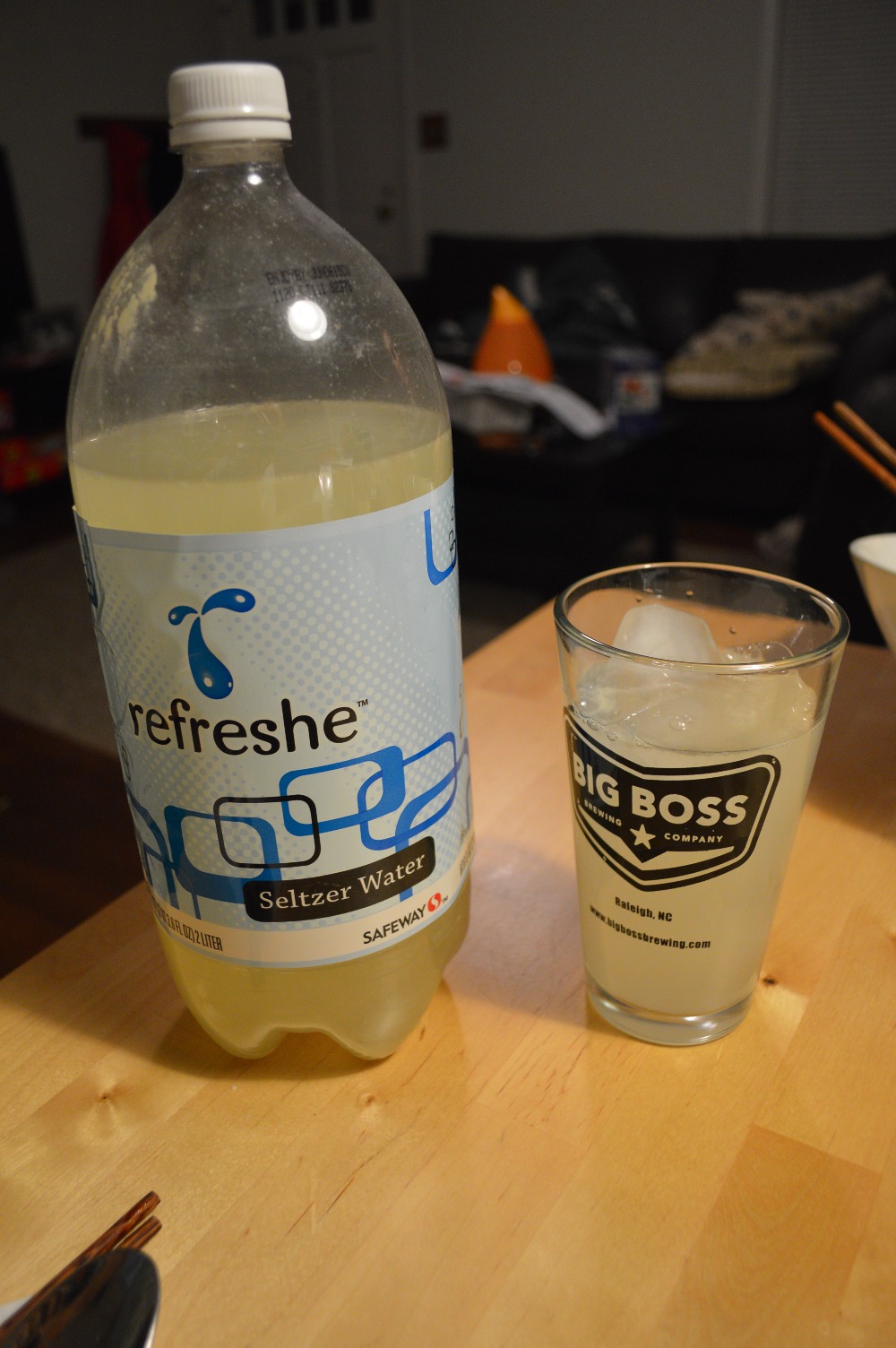
Try this homemade ginger ale recipe next time you're about to reach for a thirst quencher. Carbonation in this soda is achieved the old-fashioned way, and exactly the same way as beer - the sugars are fermented, creating carbon dioxide (and trace amounts of alcohol). It's the same for cola, ginger ale, sarsaparilla, root beer, or whatever voodoo tonic one might brew up. What you're left with is a ginger ale that's delicious and refreshing, not nearly as sweet as the store-bought version but surprisingly satisfying despite its less syrupy contents. All you need is some bread yeast, ginger, sugar, an empty 2 liter soda bottle, and a few days of patience, and you're in business. Just make sure to burp that bottle every once in a while after it's fermented, or it could bulge or even burst in your fridge or on your nicely cleaned floor.

Try this homemade ginger ale recipe next time you're about to reach for a thirst quencher. Carbonation in this soda is achieved the old-fashioned way, and exactly the same way as beer - the sugars are fermented, creating carbon dioxide (and trace amounts of alcohol). It's the same for cola, ginger ale, sarsaparilla, root beer, or whatever voodoo tonic one might brew up. What you're left with is a ginger ale that's delicious and refreshing, not nearly as sweet as the store-bought version but surprisingly satisfying despite its less syrupy contents. All you need is some bread yeast, ginger, sugar, an empty 2 liter soda bottle, and a few days of patience, and you're in business. Just make sure to burp that bottle every once in a while after it's fermented, or it could bulge or even burst in your fridge or on your nicely cleaned floor.
Thursday, October 1, 2015
Chinese Pork and Mustard Green Soup
In a lot of authentic Chinese restaurants, you might come across a pork and mustard greens soup. I tried it recently, figuring it would be exotic. It wasn't. Bland, floating in artificial chicken broth, the greens just looked up at me plaintively and forgotten, as if saying "is this how it all ends?"
To which I say "no." This is the day your life truly begins, mustard greens. Because I have scoured the far-off land of the internet in search of a better recipe that will avenge your death. A recipe with more than four ingredients, that might elevate our lowly mustard greens to something more satisfying, more vibrant, and certainly more memorable. I found it in Bon Appetit's coverage of this dish and, being the first recipe I had seen with more than a small handful of the most obvious ingredients, gave it a try.
What was produced was arguably one of the finest soups I have ever made. Light, simple, yet remarkably flavorful, this soup delivered an exotic aroma and a complexity that was almost surprising, given the speed with which it was produced and the simple ingredient list. I highly recommend seeking out a few key ingredients - true Sichuan peppercorns, half decent chicken broth, and fresh baby mustard greens, which can be found at farmer's markets around this time of year, and which deliver the appropriate amount of bitter tang and crunch that you won't get from spinach, kale, or any of the other soup-friendly greens. Go with a low-sodium chicken stock like Kitchen Basics, or make your own, which will be even better (and also even lower in sodium).


Chinese Spicy Pork and Mustard Green Soup
Modified from Bon Appetit, Jan. 2014
Mix ginger, Sichuan peppercorns, chile flakes, and cumin in a medium bowl. Heat oil in a large pot over medium-high heat. Add pork and green onion white parts and cook, stirring and breaking up with a spoon, until starting to brown, 4-5 minutes. Reduce temperature to medium if the pork is frying well, otherwise leave on medium-high to keep moisture out of the pan. Add ginger/spice mix and cook for another 1-2 minutes to incorporate. Just before adding broth, reduce heat to medium and add minced garlic, stir, and cook for no more than one minute, avoiding burning it.
Add broth and bring to a boil; reduce heat and simmer until flavors meld, 5 minutes. Add mustard greens, soy sauce, and fish sauce and cook, stirring occasionally, until greens are tender, 5–8 minutes; season with salt and white or black pepper.
Meanwhile, cook noodles according to package directions; drain. If desired, rinse noodles until cool, drain, then toss in either a neutral oil or a garlic- or shallot-infused oil. Divide noodles among bowls and ladle soup over. Garnish with green part of green onions. Serve with a small bowl of vinegar tableside, possibly with Japanese togarashi seasoning as well if you want more kick.

To which I say "no." This is the day your life truly begins, mustard greens. Because I have scoured the far-off land of the internet in search of a better recipe that will avenge your death. A recipe with more than four ingredients, that might elevate our lowly mustard greens to something more satisfying, more vibrant, and certainly more memorable. I found it in Bon Appetit's coverage of this dish and, being the first recipe I had seen with more than a small handful of the most obvious ingredients, gave it a try.
What was produced was arguably one of the finest soups I have ever made. Light, simple, yet remarkably flavorful, this soup delivered an exotic aroma and a complexity that was almost surprising, given the speed with which it was produced and the simple ingredient list. I highly recommend seeking out a few key ingredients - true Sichuan peppercorns, half decent chicken broth, and fresh baby mustard greens, which can be found at farmer's markets around this time of year, and which deliver the appropriate amount of bitter tang and crunch that you won't get from spinach, kale, or any of the other soup-friendly greens. Go with a low-sodium chicken stock like Kitchen Basics, or make your own, which will be even better (and also even lower in sodium).
Update 5/25: Now having made this dish a few dozen times, I revised this process to get maximum heat into the pork to aid in browning without burning the spices and aromatics. Also, this is equally good with turnip greens, which you may end up with if you grow turnips or get a bunch from the farmer’s market and have the tops left over. We blanch our greens in 4 cup batches and throw that whole pack right into this soup, which is really helpful for making the most of spring and fall harvest.

 |
| Left to right - homemade Chinese chicken stock with ginger and scallions, browning the pork just after spices were added, and prepared noodles tossed in oil (in this case wheat-based) |


Chinese Spicy Pork and Mustard Green Soup
Modified from Bon Appetit, Jan. 2014
Updated May 2025
Depending on preference, toast and grind the dried spices - Sichuan peppercorns, chile flakes, and cumin.
- ½ pound ground pork
- 2 cloves garlic finely chopped
- 2 teaspoons finely grated peeled ginger
- 1 teaspoon Sichuan peppercorns, crushed
- ¾ teaspoon crushed red pepper flakes
- ½ teaspoon cumin seeds, coarsely chopped
- 1 tablespoon vegetable oil
- Kosher salt and freshly ground white (or black if you don’t have it) pepper
- 4 cups low-sodium chicken broth
- 1 bunch mustard greens, torn (about 4 cups)
- 4 scallions, white parts in 1” lengths, green parts thinly sliced
- 2 tablespoons soy sauce
- 1 teaspoon Thai fish sauce
- 8 oz. wide rice noodles
- 1/4 cup unseasoned rice vinegar or black vinegar, for serving
Depending on preference, toast and grind the dried spices - Sichuan peppercorns, chile flakes, and cumin.
Mix ginger, Sichuan peppercorns, chile flakes, and cumin in a medium bowl. Heat oil in a large pot over medium-high heat. Add pork and green onion white parts and cook, stirring and breaking up with a spoon, until starting to brown, 4-5 minutes. Reduce temperature to medium if the pork is frying well, otherwise leave on medium-high to keep moisture out of the pan. Add ginger/spice mix and cook for another 1-2 minutes to incorporate. Just before adding broth, reduce heat to medium and add minced garlic, stir, and cook for no more than one minute, avoiding burning it.
Add broth and bring to a boil; reduce heat and simmer until flavors meld, 5 minutes. Add mustard greens, soy sauce, and fish sauce and cook, stirring occasionally, until greens are tender, 5–8 minutes; season with salt and white or black pepper.
Meanwhile, cook noodles according to package directions; drain. If desired, rinse noodles until cool, drain, then toss in either a neutral oil or a garlic- or shallot-infused oil. Divide noodles among bowls and ladle soup over. Garnish with green part of green onions. Serve with a small bowl of vinegar tableside, possibly with Japanese togarashi seasoning as well if you want more kick.

Subscribe to:
Posts (Atom)
LinkWithin
